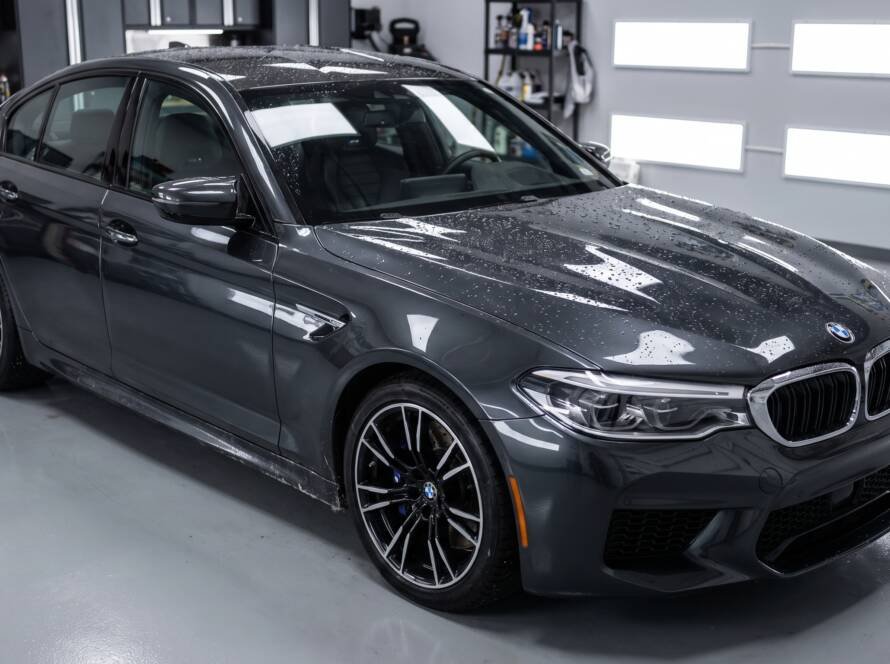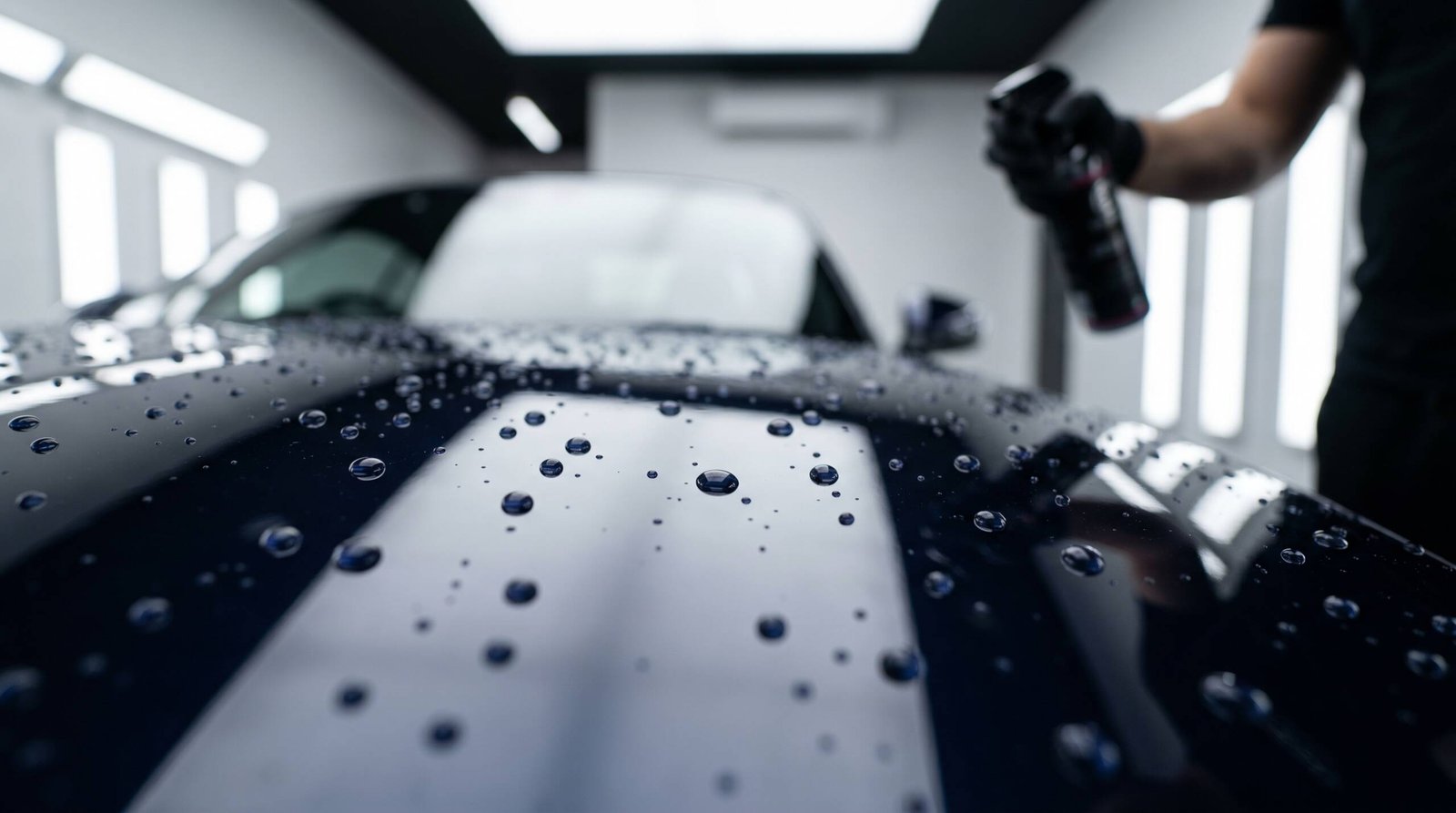
Ontario summers are brutal on paint. UV index peaks at 7–9 in June, bird droppings hit the 400-series corridors all spring, bug splatter etches clear coat on the highway, and road salt returns every October. A fresh wax lasts six weeks. A professional ceramic coating lasts years — bonding chemically to your paint surface and forming a permanent layer of protection that sheds water, repels contaminants, and keeps your paint looking new long after a standard detail would have worn off.
At MDM Auto Detail at 11352 Yonge St, Richmond Hill, we install professional-grade ceramic coatings for drivers across Richmond Hill, Vaughan, Markham, Aurora, Newmarket, and the broader GTA. Whether you’re protecting a daily driver or preserving a weekend exotic, here’s everything you need to know.
What Is Ceramic Coating?
Ceramic coating (also called nano-ceramic coating or quartz coating) is a liquid polymer — primarily silicon dioxide (SiO2) — that chemically bonds to your vehicle’s factory paint or clear coat. Unlike wax or sealant, which sit on top of the paint and wear away, ceramic coating forms a semi-permanent covalent bond that can only be removed by abrasion or chemical stripping.
The result: a hardened, hydrophobic, UV-resistant layer that becomes part of the paint surface itself. Water sheets off rather than settling into contours. Dirt, bird droppings, tree sap, and road salt are unable to bond to the surface the same way. Washing becomes dramatically easier. And your paint retains its depth and gloss year after year.
Why May & June Is the Best Time to Coat in Ontario
Spring is the ideal coating window for Ontario drivers, and not just because the weather is pleasant:
- UV season starts now. June UV index in the GTA regularly hits 7–9 — the range where unprotected clear coat begins to oxidize and fade. Coating before summer locks UV protection in before peak exposure.
- Bug splatter season peaks in May–June. Insect proteins are acidic and etch clear coat within hours on a hot hood. Ceramic’s hydrophobic surface prevents bugs from bonding — and makes them trivial to remove before they cause damage.
- Bird activity is highest in spring migration. Bird droppings are among the most acidic contaminants a car encounters. Ceramic coating’s chemical resistance buys you time to wipe them off safely.
- New car deliveries peak in spring. The single best time to ceramic coat a car is before it accumulates its first swirls. If you’re picking up a new vehicle, coat it before the first wash.
- Summer heat amplification. Pavement surface temps in GTA summer reach 50–60°C. Graphene ceramic coatings specifically dissipate heat better than standard SiO2 — reducing water spotting risk on hot panels.
CarPro CQuartz & Artdeshine Ceramic Coating at MDM Auto Detail
MDM Auto Detail applies CarPro CQuartz & Artdeshine professional ceramic coatings — a product line trusted by certified installers across Canada for its bonding strength, gloss depth, and warranty-backed durability. CarPro CQuartz & Artdeshine coatings are not available over the counter; they’re restricted to certified professional installers, which means the formulas are significantly more durable than anything available at an auto parts store.
Coating Packages
| Package | Protection Duration | Best For | GTA Price Range |
|---|---|---|---|
| Entry — Single Layer | 1–2 years | Daily drivers, lease vehicles | $500 – $900 |
| Mid-Tier — Multi-Layer | 3–5 years | Enthusiasts, new vehicles | $1,000 – $1,800 |
| Premium — Full Build | 7–10 years | Exotics, high-value vehicles | $2,000 – $4,000+ |
| Graphene Upgrade | Varies by base package | Any vehicle in hot/dusty climates | +$200 – $400 |
All packages include a pre-coating paint inspection. Paint correction (polishing) is quoted separately and recommended for vehicles with existing swirl marks, oxidation, or water spots — ceramic coating locks in whatever is underneath it, so correct first.
Ceramic Coating vs. PPF vs. Wax: Which Do You Need?
| Protection Type | Stone Chips | Swirl Marks | UV Fade | Chemical Resistance | Hydrophobics | Duration |
|---|---|---|---|---|---|---|
| Wax / Sealant | ❌ | ❌ | Minimal | ❌ | ⚠️ Light | 4–12 weeks |
| Ceramic Coating | ❌ | ⚠️ Resists light swirls | ✅ Strong | ✅ Strong | ✅ Excellent | 1–10 years |
| PPF (clear) | ✅ Full protection | ✅ Self-healing | ✅ Strong | ✅ Strong | ⚠️ Moderate | 10+ years |
| PPF + Ceramic | ✅ Full protection | ✅ Self-healing | ✅ Maximum | ✅ Maximum | ✅ Excellent | 10+ years |
The bottom line: Wax protects for weeks. Ceramic protects for years. PPF protects against physical impact that ceramic cannot. The ultimate setup — used by high-value vehicle owners at MDM — is PPF on the front end (where chips happen) and ceramic coating over the entire car for maximum environmental protection and gloss.
What Is Graphene Ceramic Coating?
Graphene ceramic coatings are the newest evolution in paint protection — infusing graphene molecules into the traditional SiO2 ceramic formula. Graphene is one of the strongest materials known, and its addition to ceramic coating improves:
- Heat dissipation: Graphene conducts heat away from the paint surface, reducing water spot formation on hot panels in GTA summer — the most common complaint with standard SiO2 coatings.
- Hydrophobic contact angle: Higher water contact angle means more aggressive beading and sheeting.
- Anti-static properties: Graphene reduces static charge on the paint surface, meaning less dust and particulate adhesion between washes.
- Durability: Harder, more flexible coating layer that’s more resistant to minor abrasion.
Ask MDM about graphene upgrade availability when booking your coating appointment.
The MDM Ceramic Coating Process
- Paint inspection: Full walk-around under controlled lighting to assess the paint’s current condition — swirl marks, water spots, oxidation, scratches, and contamination.
- Decontamination wash: Two-bucket hand wash, iron fallout remover spray, and clay bar treatment to remove bonded surface contaminants that would otherwise be sealed under the coating.
- Paint correction (if needed): One-stage or two-stage machine polish to remove swirl marks and oxidation. This step is critical — ceramic coating magnifies gloss depth, which means it also magnifies imperfections. We correct before we coat.
- IPA panel wipe: Every panel wiped with isopropyl alcohol to remove polishing oils and ensure a clean, chemical-free bonding surface.
- Ceramic application: CarPro CQuartz & Artdeshine coating applied panel-by-panel in a climate-controlled bay. Temperature and humidity are controlled for consistent cure.
- Flash & level: Coating allowed to flash, then levelled and buffed to remove high spots before final cure begins.
- Cure time: Vehicle kept dry for 24–48 hours minimum. Full cure completes over 7–14 days. Avoid automated car washes for 30 days.
How Long Does Ceramic Coating Last in Ontario?
Ontario’s climate is genuinely harder on coatings than most Canadian provinces. Road salt from October through March is the primary degradation factor — salt is chemically corrosive and abrasive. The good news: a quality CarPro CQuartz & Artdeshine coating is specifically formulated to handle it. What matters for longevity:
- No automated brush car washes — the brushes introduce micro-scratches that degrade the coating surface and reduce hydrophobics over time. Touchless washes are acceptable; hand-washing is ideal.
- Annual maintenance coating — a light maintenance spray (SiO2 boost) applied once a year after washing extends coating life significantly and restores hydrophobics between recoat cycles.
- Avoid strong alkaline cleaners — pH-neutral soap only. Dish soap, engine degreasers, and tar removers can degrade the coating if used regularly.
How Much Does Ceramic Coating Cost in the GTA?
Ceramic coating is one of the most price-variable services in the detailing industry because the cost includes both the coating material and the labour-intensive prep work (decontamination, paint correction) required for a lasting result. Here’s what GTA drivers should expect to pay in 2026:
| Vehicle Type | Entry (1–2 yr) | Mid-Tier (3–5 yr) | Premium (7–10 yr) |
|---|---|---|---|
| Compact / Sedan | $500 – $900 | $1,000 – $1,800 | $2,000 – $3,200 |
| SUV / Crossover | $700 – $1,200 | $1,400 – $2,200 | $2,500 – $4,000 |
| Truck / Large SUV | $900 – $1,400 | $1,600 – $2,500 | $3,000 – $4,500 |
| Exotic / Supercar | $1,200+ | $2,500+ | $4,000+ |
Paint correction adds $200–$800 depending on the extent of correction needed. MDM provides a free, no-obligation quote after a paint inspection — book yours here.
Why Choose MDM Auto Detail for Ceramic Coating in Richmond Hill?
- Certified CarPro CQuartz & Artdeshine installer — professional-grade coatings not available at retail
- Full in-house capability: paint correction, ceramic coating, PPF, window tint — all under one roof
- Climate-controlled bay — temperature and humidity managed for consistent cure results year-round
- Proper prep every time — decontamination and correction before every coating application
- Free paint inspection and quote — no pressure, accurate pricing before you commit
- Serving Richmond Hill, Vaughan, Markham, Aurora, Newmarket, Thornhill, and the GTA
Frequently Asked Questions
How much does ceramic coating cost in the GTA?
Entry-level ceramic coating runs $500–$900 for a compact car, mid-tier 3–5 year coatings $1,000–$1,800, and premium 7–10 year coatings $2,000–$4,000+ for a sedan. SUVs run slightly more. Get a free quote for your vehicle.
How long does ceramic coating last?
1–2 years at entry level, 3–5 years mid-tier, and 7–10 years (or permanent) at the premium tier with proper maintenance. Ontario road salt and no brush-wash car washes are the two most important factors for maximizing lifespan.
Is ceramic coating worth it in Ontario?
Yes — Ontario’s combination of road salt, high summer UV, bug season, and bird droppings in spring makes ceramic coating an especially strong value compared to milder climates. The hydrophobic effect alone makes salt washing dramatically easier all winter.
What’s the difference between ceramic coating and PPF?
PPF is a thick film that blocks physical impact (stone chips, scratches). Ceramic coating is a chemical bond to the paint that blocks environmental damage (UV, chemicals, bird droppings, water spotting). They do different jobs — and they’re fully compatible. MDM installs both in-house.
Does ceramic coating prevent scratches?
It resists light swirl marks from washing, but it won’t stop a stone chip or key scratch. It’s chemical armour, not physical armour. For scratch and chip protection, PPF is required.
What is graphene coating and is it better?
Graphene ceramic coatings add graphene molecules to the SiO2 formula, improving heat dissipation, water beading, anti-static properties, and durability. They reduce water spotting on hot panels in GTA summer — a real advantage in our climate. MDM offers graphene upgrades on applicable packages.
Do I need paint correction before ceramic coating?
For best results, yes. Ceramic coating bonds to whatever is underneath it — swirl marks, oxidation, and water spots will be locked in if not corrected first. MDM inspects every vehicle before coating and recommends a polish for most cars that aren’t brand new.
How long does the application take?
1 day for entry-level coating with light prep. 2–3 days for multi-layer premium packages with full paint correction. Your car must stay dry for 24–48 hours after application.
Book Your Ceramic Coating Appointment in Richmond Hill
MDM Auto Detail offers free paint inspections and no-obligation quotes for all ceramic coating packages — from single-layer daily-driver protection to full multi-layer premium builds with paint correction. Serving Richmond Hill, Vaughan, Markham, Aurora, Newmarket, King City, Thornhill, and the GTA.
📍 11352 Yonge St, Unit 1, Richmond Hill, ON L4S 1L2