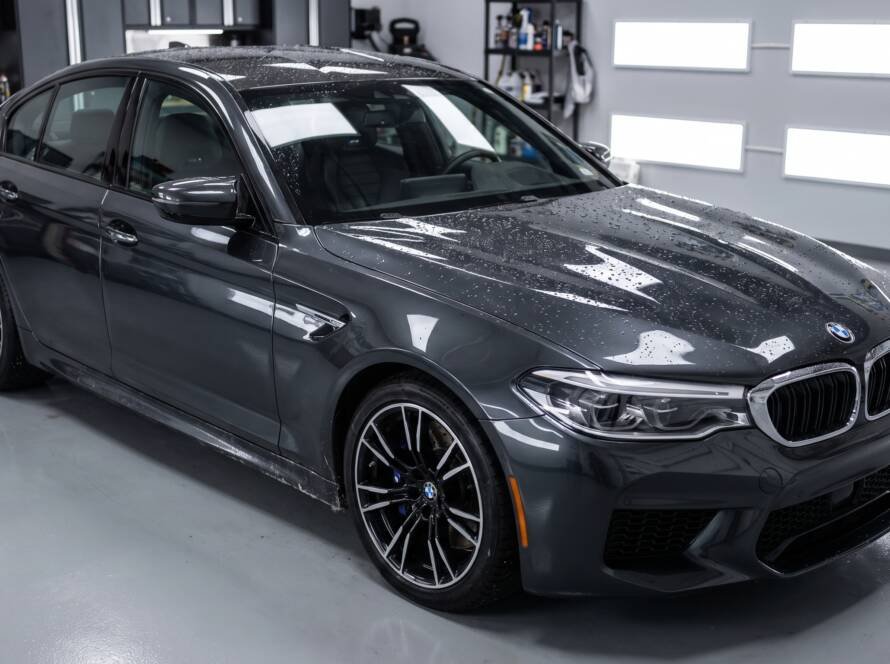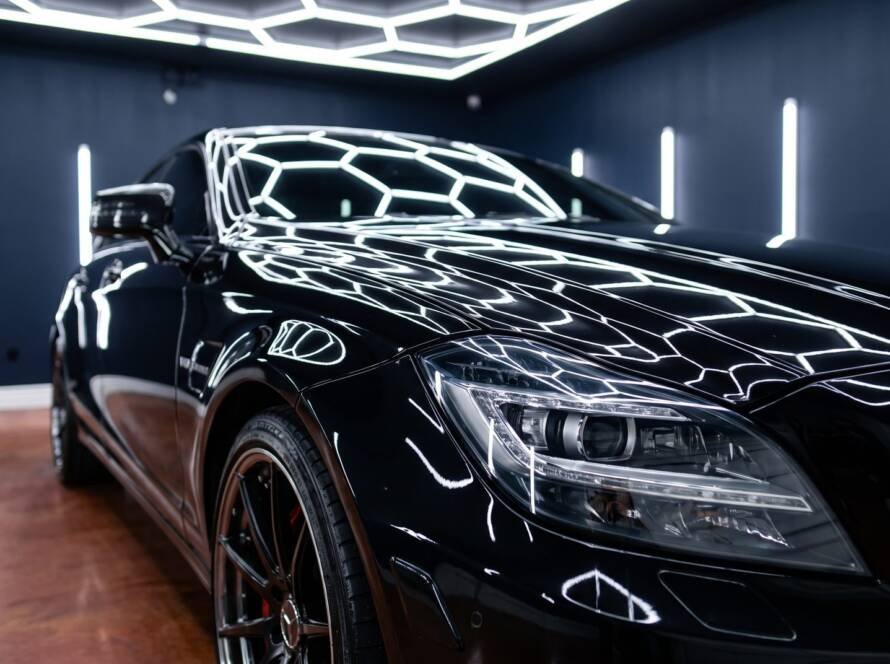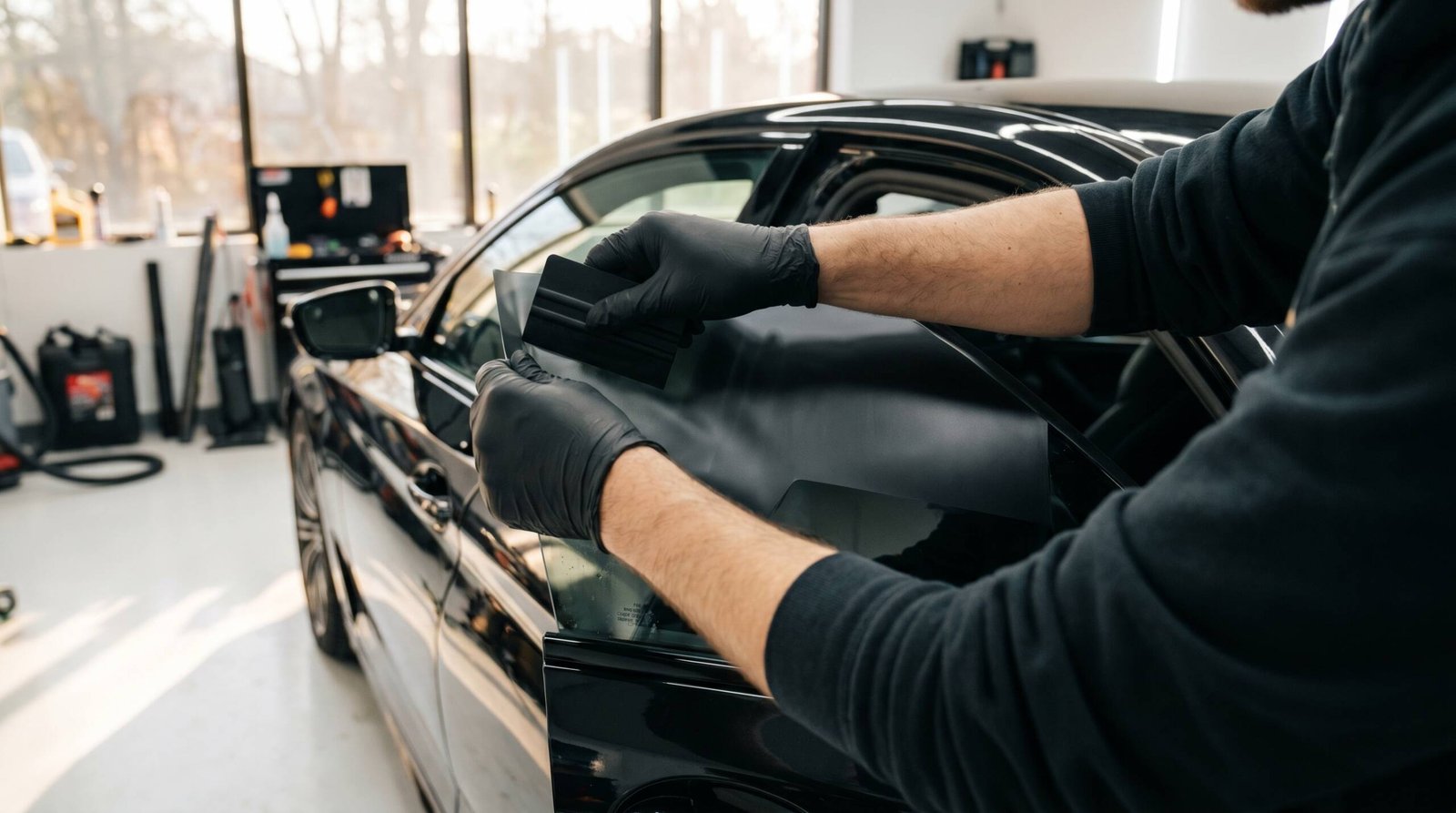
The first warm week hits Toronto and the calls start coming in. After a long winter, the sun is finally back — and so is the reality of a black interior baking in a parking lot, a steering wheel too hot to touch, and the A/C running flat out on the 404.
Window tint is the cheapest upgrade that fixes all three. But not all tint is the same, and the wrong choice either cooks you anyway or gets you a ticket. Here’s the honest breakdown from our shop on Yonge St in Richmond Hill — what ceramic tint actually does, what Ontario law allows, and what makes sense for GTA drivers heading into summer.
Why Ceramic Tint — Not Just “Tint”
Most people think tint is about how dark the windows look. It’s not. The film’s job is to reject heat and UV — and that’s where cheap dyed film and premium ceramic film are worlds apart.
Dyed / “Regular” Tint
Standard dyed film is a coloured layer that mostly just blocks visible light. It looks dark, but it does very little against the part of sunlight that actually heats your car — infrared (IR) radiation. Dyed film also fades and turns that tell-tale purple after a couple of Ontario summers.
Nano-Ceramic Tint
Ceramic tint uses microscopic ceramic nanoparticles to reject infrared heat and ultraviolet light without relying on dye or metal. At MDM Auto we install XPEL XR and XR+ ceramic film — XPEL’s premium nano-ceramic lines, with XR+ delivering the highest heat rejection in the range. That difference shows up in the numbers:
- Blocks up to 99% of UV rays — protects your skin and stops your dashboard, leather, and trim from cracking and fading
- Rejects a large share of infrared heat — premium nano-ceramic films block up to ~96–98% of IR, the wavelength you actually feel as heat
- High Total Solar Energy Rejection (TSER) — top ceramic films hit a TSER in the ~60–65% range, meaning the majority of the sun’s total energy never makes it into the cabin
- No signal interference — unlike metalized film, ceramic won’t disrupt your phone, GPS, Bluetooth, or remote start
- Won’t fade or turn purple — no dye to break down, so it stays true for the life of the film
The practical result: a cooler cabin, less A/C load (which matters for EVs and fuel economy), and a car that doesn’t punish you for parking in the sun.
How Hot Toronto Summers Change the Calculation
Late May through September, the GTA gets real heat and long daylight hours. A few things make ceramic worth it here specifically:
Parked cars get brutal. A dark interior in a Richmond Hill or Vaughan parking lot can climb 20–30°C above the outside temperature. Ceramic tint’s IR rejection is what keeps that from happening.
UV exposure is year-round damage. Even on cooler days, UV degrades your interior. A new lease or a freshly detailed car holds its value far longer with the dash and seats protected.
Commuter sun on the 404 and 400. Long highway drives mean long sun exposure on your arms, face, and passengers. UV protection isn’t just comfort — it’s skin protection on every commute.
| What you care about | Dyed / Regular Tint | Nano-Ceramic Tint |
|---|---|---|
| UV protection | Limited | Up to 99% blocked |
| Heat (infrared) rejection | Minimal | Rejects most IR heat |
| Fading / purple over time | Fades & turns purple | Stays true |
| Phone / GPS signal | No interference | No interference |
| Glare reduction | Yes | Yes |
| Longevity | A few years | Lifetime warranty (XPEL) |
Ontario’s Window Tint Law — Stay Legal
This is where a lot of drivers get burned. In Ontario the rules are specific, and tickets run $85 to $500 per violation. Here’s what’s actually allowed (current as of 2026):
- Front side windows: minimum 70% VLT. Visible Light Transmission must be 70% or higher — meaning you can only block up to 30% of light on the front doors. A light ceramic film keeps you legal while still rejecting heat and UV.
- Windshield: no tint. Aftermarket windshield tint has been illegal since January 1, 2017. The only exception is a non-reflective strip up to 15 cm (about 6 inches) at the very top.
- Rear windows: no VLT limit. Back side windows and the rear windshield can be as dark as you like, as long as both side mirrors are functional.
- No reflective or mirrored tint. Mirror-finish films are not legal in Ontario.
- No medical exemption. Ontario’s Regulation 611 has no clause allowing darker front tint for medical conditions — don’t count on one.
The key takeaway most people miss: ceramic film works at legal shades. Because ceramic rejects heat and UV through the film’s technology — not just by being dark — you get serious heat protection on your front windows at a legal 70% VLT, and you can go darker on the rears.
What to Expect: Install, Curing, and Aftercare
A typical full-vehicle tint takes a few hours depending on the number of windows and the vehicle. After install, the film needs to cure:
- Don’t roll your windows down for 3–5 days while the adhesive sets
- You may see slight haze, water pockets, or tiny bubbles for the first week or two — that’s trapped moisture evaporating, and it clears on its own
- Wait a couple of weeks before cleaning the inside of the glass, then use a soft microfibre and an ammonia-free cleaner
Curing is faster in warm, sunny weather — which is exactly why late spring and summer are the ideal time to get tint done in Toronto.
Pairing Tint With Ceramic Coating
A lot of our clients book tint and ceramic coating together as a summer package — and it’s a natural pairing. Tint protects the inside of your car from heat and UV; ceramic coating protects the outside paint from sun, bird droppings, tree sap, and water spots that get worse in summer.
If you’re already coming in, doing both in one visit means one trip, one curing window, and a car that’s protected inside and out for the season. Ask us about combining the two.
Our Recommendation for GTA Drivers
For most Richmond Hill, Vaughan, and Markham drivers heading into summer, here’s the straightforward call:
- Go ceramic, not dyed. The heat and UV rejection is the entire point — cheap film fades and barely cools the cabin.
- Keep the fronts legal at 70% VLT. You still get the heat and UV benefit; you avoid the ticket.
- Go darker on the rears if you want privacy or a finished look — it’s legal and it helps cool the back seats.
- Do it in spring/early summer while the weather speeds up curing and before the peak-heat rush.
Average full-vehicle ceramic tint in the GTA runs roughly $300 to $600, depending on the vehicle, the number of windows, and the film line. Our XPEL XR and XR+ tints are backed by a lifetime warranty — covering fading, bubbling, peeling, and discolouration for as long as you own the car.
If you’re not sure what shade or package fits your car, bring it by. We’ll walk you through the film options, show you the difference, and give you a straight quote — no pressure.
Book Your Tint Quote
MDM Auto Detail — 11352 Yonge St, Unit 1, Richmond Hill, ON
Call +1 647-370-3443 or book online. Serving Richmond Hill, Vaughan, Markham, Thornhill, and the Greater Toronto Area.
Frequently Asked Questions
Is ceramic window tint worth the extra cost?
Yes, for most drivers. Ceramic tint rejects far more infrared heat and blocks up to 99% of UV compared to standard dyed film, and it won’t fade or turn purple. You feel the difference in cabin temperature, your A/C works less, and your interior is protected from sun damage. For a car you plan to keep or that sits in the sun, it pays for itself in comfort and resale value.
What’s the darkest legal tint in Ontario?
On front side windows, the law requires a minimum of 70% VLT — so you can block at most 30% of light. The windshield can’t be tinted aftermarket (except a 15 cm strip at the top). Rear side windows and the rear windshield have no darkness limit as long as both side mirrors work.
Does ceramic tint block heat even at a light shade?
Yes — that’s the main advantage. Ceramic film rejects infrared heat and UV through its nano-ceramic technology, not by being dark. So a legal, light 70% VLT ceramic film on your front windows still rejects significant heat and UV, unlike dyed film that only works by being dark.
Will ceramic tint affect my phone, GPS, or remote start?
No. Unlike older metalized films, ceramic tint contains no metal, so it won’t interfere with cell signal, GPS, Bluetooth, radio, or remote start.
How long after tinting can I roll my windows down?
Wait 3–5 days for the adhesive to cure before rolling windows down. It’s normal to see slight haze or small water bubbles for the first week or two — that’s moisture evaporating, and it clears on its own. Curing is faster in warm, sunny weather.
Can I get just my front windows tinted to the legal limit?
Absolutely. Many drivers tint the fronts to a legal 70% VLT ceramic film for heat and UV protection, then go darker on the rears for privacy. We can match the rear shade to the look you want while keeping the fronts street-legal.
What does the tint cost and is it warrantied?
Full-vehicle ceramic tint in the GTA averages around $300 to $600, depending on your vehicle, the number of windows, and the film line. At MDM Auto we install XPEL XR and XR+ ceramic film backed by a lifetime warranty that covers fading, bubbling, peeling, and discolouration for as long as you own the vehicle.
MDM Auto Detail — 11352 Yonge St, Unit 1, Richmond Hill, ON · +1 647-370-3443
Serving Richmond Hill, Vaughan, Markham, and the Greater Toronto Area