Paint protection film is a significant investment. Before committing to it, the most practical question most drivers ask is a straightforward one: how long will it actually last?
The honest answer is 7 to 10 years — under normal Canadian driving conditions, with proper care, from a quality professional installation. Some films push past 10 years on vehicles that see light use and careful washing. Some fail at 4 or 5 from a combination of poor installation, harsh exposure, and neglect.
What separates the two outcomes isn’t luck. It’s a set of variables you can actually control — and some you need to understand before you book.
Here’s a complete breakdown of PPF lifespan specific to Ontario driving conditions, what degrades film faster than anything else, and what you can do to extend your investment.
What PPF Is Made Of and Why It Matters for Longevity
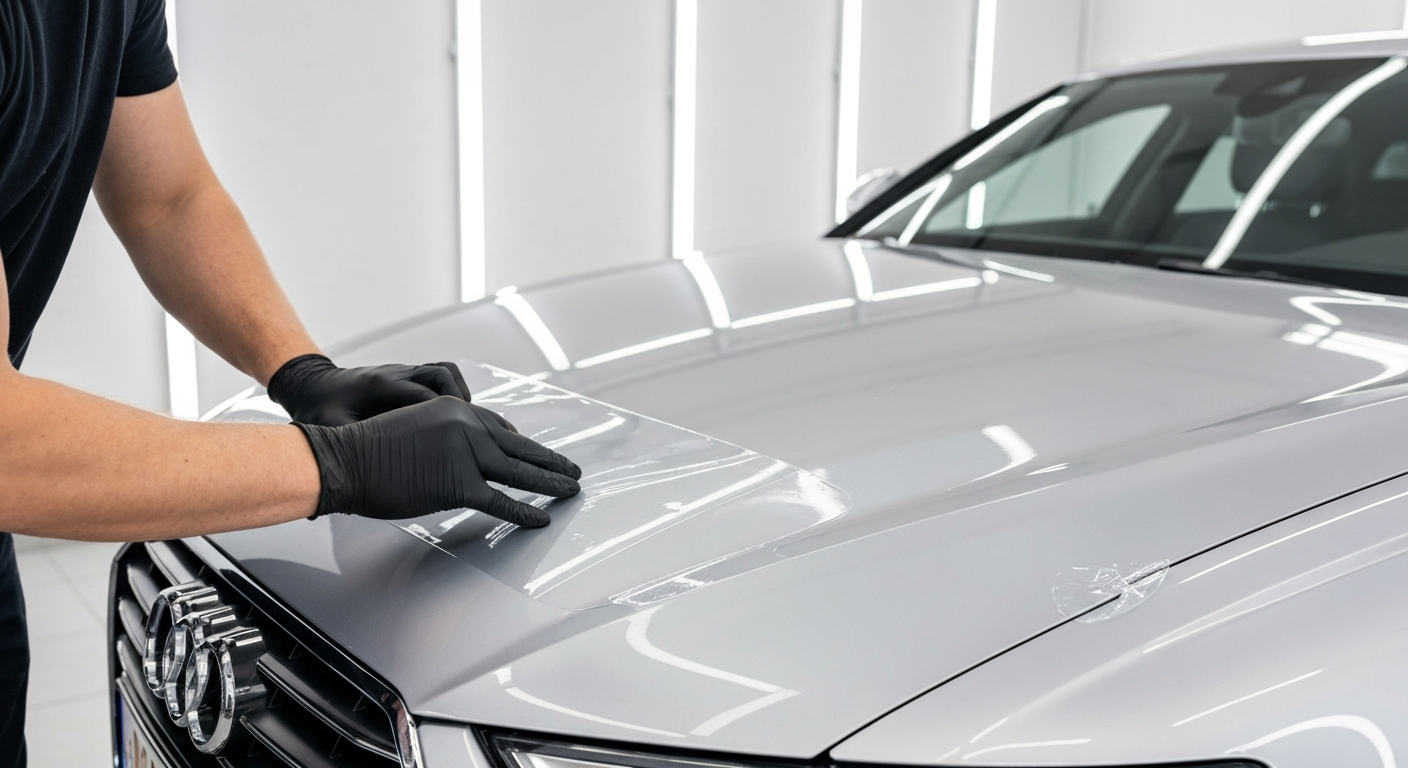
Paint protection film is a thermoplastic urethane (TPU) film — a clear, flexible polymer layer typically 6 to 8 mils thick that bonds to your paint and absorbs impacts, abrasion, and environmental contamination before they reach the clear coat underneath.
Modern PPF has three properties that determine how long it lasts:
Self-healing topcoat — the outermost layer of quality PPF is designed to flow back into place under heat, erasing light scratches and swirl marks. This self-healing capability degrades over time as the topcoat is repeatedly activated and stressed. On high-quality film, it remains effective for 7–10 years. On low-grade film, it can lose function within 2–3 years.
UV stabilisers — PPF contains UV inhibitors built into the film layers to prevent yellowing and brittleness from sun exposure. Ontario summers deliver meaningful UV load, especially on horizontal surfaces like the hood and roof. Film without adequate UV stabilisation will yellow, haze, or become brittle significantly faster than rated lifespan.
Adhesive layer — the adhesive bonding film to paint must maintain its hold through Ontario’s temperature range: -30°C winters to +35°C summers, with repeated freeze-thaw cycles. Cheap adhesive fails at the edges and corners first — lifting, bubbling, and allowing moisture and road salt to get underneath.
The difference between 5-year film and 10-year film is almost entirely in these three layers.
How Canadian Weather Specifically Affects PPF
Ontario conditions are harder on paint protection film than most other climates. Understanding why helps you maintain the film correctly.
Winter: Road Salt and Freeze-Thaw
York Region road salt is the biggest film stressor specific to Canadian driving. Salt-laden water is highly corrosive and, when it gets into any edge lift or imperfection in the film, it can work under the adhesive and compromise bonding. Repeated freeze-thaw cycles expand and contract any existing edge gaps, accelerating edge lift.
Proper edge wrapping during installation — pulling film around panel edges rather than cutting at the edge line — is the primary defence against this. It’s one of the key differences between a quality installation and a cheap one.
Summer: UV and Heat
Ontario summers sit at a UV index of 7–9 on peak summer days — high enough to degrade lower-quality film over several seasons. Heat also activates the self-healing topcoat repeatedly just from sitting in the sun, which depletes its effectiveness faster on cheaper film.
Dark-coloured vehicles parked in direct sun in summer see hood surface temperatures of 60–80°C — well within the activation range of the self-healing layer. This is generally fine for quality film but hard on low-grade products.
Winter Car Washes
High-pressure automated car washes in winter are a leading cause of early edge lift on PPF. The high-pressure spray at close range on cold, rigid film edges is a stress the film wasn’t designed for repeatedly. If you’re driving a PPF-wrapped vehicle in winter, touchless washes or hand washing are strongly preferable to brush-based automated washes.
What Shortens PPF Lifespan the Most
In order of impact:
1. Poor installation quality — edge wrapping shortcuts, improper surface prep, installation over contaminated paint, inadequate cure time before exposure. This is the single biggest variable. A film rated for 10 years can fail in 3 if it goes on wrong.
2. Automated car washes with brushes — the combination of high pressure and abrasive contact degrades the self-healing topcoat faster than almost anything else and causes progressive edge lift.
3. Letting contaminants sit — road tar, bird droppings, and tree sap are acidic or adhesive and will bond to or etch the film surface if left. On quality film with a slick topcoat they wipe off easily when fresh; left for days or weeks they can permanently mark the film.
4. Ignoring edge lift early — small edge lifts, especially around mirrors, bumper corners, and hood edges, catch water, salt, and debris. Left unaddressed they grow. Caught early, they’re often repairable.
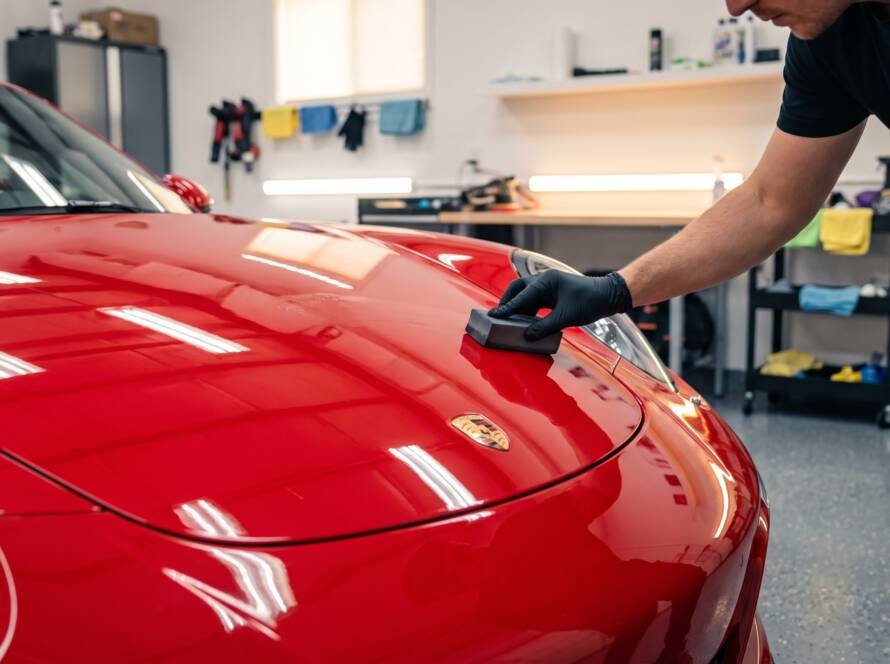
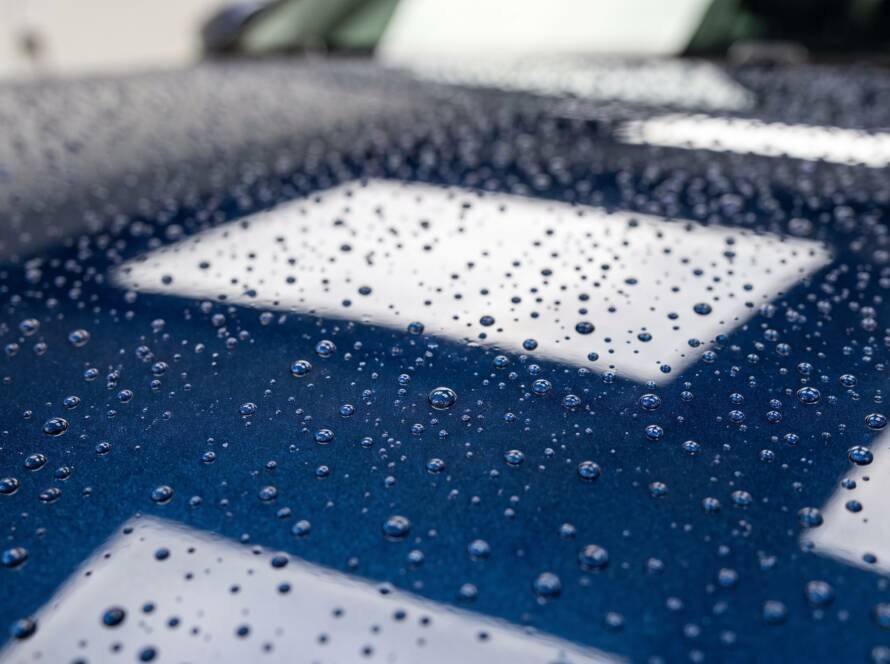
5. No ceramic coating over the film — applying a ceramic coating over installed PPF seals the topcoat, reduces contamination adhesion, and significantly extends how long the film looks pristine. Without it, the film’s surface is more porous and harder to clean.
What Extends PPF Lifespan
Professional installation with full edge wraps — properly trained installers pull film around panel edges and into door jambs where possible, eliminating the exposed edge that road salt and water attack first.
Ceramic coating over PPF — a professional-grade ceramic coating applied over the film after installation adds a sacrificial layer on top of the self-healing topcoat. The film is easier to clean, more resistant to contamination bonding, and looks better longer.
Touchless or hand washing — especially important in winter. Soft contact hand washing with a proper two-bucket method is the best way to maintain both the film surface and the edge integrity.
Regular decontamination — iron fallout, tar, and mineral deposits from Ontario hard water accumulate on the film surface. Annual decontamination treatments keep the surface clean and prevent chemical etching.
Prompt attention to damage — if you notice an edge starting to lift, a bubble forming, or a section of film looking abnormal, address it promptly. Most early-stage issues are repairable. Neglected for a season, they become replacements.
PPF Lifespan by Placement Zone
Not all areas of the car take equal punishment. PPF lifespan varies significantly by where on the vehicle it’s installed:
| Zone | Typical Exposure | Expected Lifespan |
|---|---|---|
| Front bumper | Rock chips, salt spray, insects | 7–9 years |
| Hood (full) | Rock chips, UV, heat | 8–10 years |
| Fenders | Rock chips, road spray | 8–10 years |
| Mirrors | Wind pressure, abrasion | 7–9 years |
| Door edges | Parking lot contact | 8–10 years |
| Rocker panels | Salt, gravel, road spray | 6–8 years |
| Roof | UV, bird droppings | 9–10 years |
Rocker panels and the front bumper typically show wear first — they take the most direct road debris impact in Ontario driving conditions.
When to Replace PPF
Film should be assessed for replacement when:
- Yellowing or hazing — especially on the hood and roof. Some discolouration on film edges after years of UV exposure is normal; uniform yellowing across a panel indicates the film has reached end of life.
- Persistent bubbling — isolated bubbles from installation usually resolve within the first few weeks. Bubbling that develops after years of use indicates adhesive failure.
- Edge lift that can’t be repaired — when edge lift has progressed too far for spot repair or re-sealing, section replacement is the right call.
- Loss of self-healing — when the topcoat no longer flows out scratches under heat, the film is providing mechanical protection only.
- Clarity loss — film that has turned hazy or significantly reduced the gloss of the paint underneath has passed its useful visual life.
PPF vs. Letting Paint Age Unprotected
For context on whether PPF’s lifespan makes it worthwhile: a vehicle driven unprotected in Ontario for 7–10 years accumulates rock chips across the front bumper, hood, and fenders; significant swirl marking from automated washes; water spot etching on horizontal surfaces; and oxidation that dulls the clear coat. Correcting that damage at the end of the period requires paint correction, possible touch-up work, and ceramic coating — at a cost that often approaches or exceeds the original PPF investment.
Film that lasts 7–10 years and is then replaced is significantly less expensive than repainting or respraying panels that saw a decade of unprotected Ontario roads.
What to Expect at MDM Auto
At MDM Auto in Richmond Hill, every PPF installation starts with a paint inspection — we won’t install film over paint that has existing defects, because whatever is under the film at installation is locked in permanently. If paint correction is needed first, we recommend it before any film goes on.
We offer full-front coverage (bumper, hood, fenders, mirrors, A-pillars), rocker panel protection, and full-vehicle wraps depending on your exposure level and budget.
After installation, we recommend a ceramic coating over the film to maximise longevity and ease of maintenance.
Call us at +1 647-370-3443 or book a free paint assessment at 11352 Yonge St, Unit 1, Richmond Hill, ON.
We serve Richmond Hill, Vaughan, Markham, and the broader GTA.
Frequently Asked Questions
How long does paint protection film last in Ontario?
Quality PPF professionally installed in Ontario typically lasts 7 to 10 years. The variables that most affect lifespan are installation quality, washing habits, and whether a ceramic coating is applied over the film after installation.
Does road salt damage paint protection film?
Road salt doesn’t damage the film surface itself, but it can exploit any existing edge lift and work under the adhesive, causing bonding failure. Proper edge wrapping during installation and avoiding high-pressure washes near film edges in winter are important for Canadian vehicles.
Can PPF be repaired if it starts to lift or bubble?
Early-stage edge lift and small bubbles can often be repaired without replacing the entire section. Prompt attention matters — edge lift caught early is usually repairable; left through another winter it typically requires section replacement.
Does ceramic coating extend PPF lifespan?
Yes. A ceramic coating applied over PPF adds a sacrificial layer on top of the film’s self-healing topcoat, reduces contamination adhesion, and makes the surface significantly easier to clean. Vehicles with PPF and ceramic coating consistently maintain better appearance and film integrity over time.
Should I get PPF or ceramic coating — or both?
They serve different functions. PPF provides mechanical protection against rock chips and abrasion. Ceramic coating provides chemical resistance, hydrophobicity, and ease of cleaning. For vehicles driven on Ontario highways, PPF on vulnerable panels with ceramic coating over the film is the most complete protection approach. We cover this in detail in our PPF vs Ceramic Coating guide.
MDM Auto Detail — 11352 Yonge St, Unit 1, Richmond Hill, ON · +1 647-370-3443
Serving Richmond Hill, Vaughan, Markham, and the Greater Toronto Area