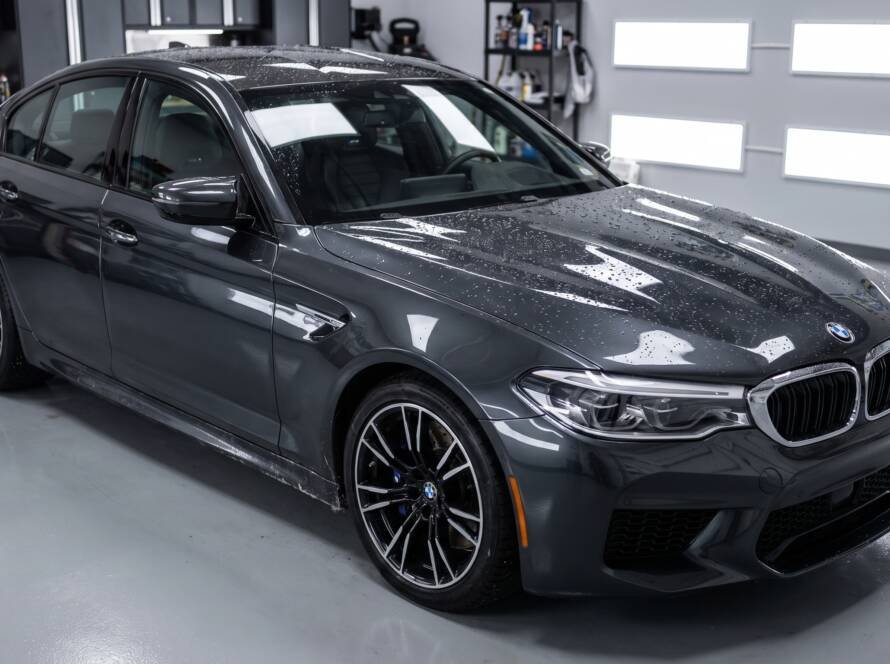
Every winter, York Region spreads sand and gravel on the roads along with the salt. It helps with grip, but it also gets thrown at your car at highway speed.
By spring, a lot of hoods and bumpers in Richmond Hill are covered in tiny chips. Paint protection film is the one product that stops them. Here is how it works, what to cover and why winter is when it matters most.
What Paint Protection Film Is
Paint protection film, or PPF, is a clear, flexible urethane layer applied over your paint. You may also hear it called clear bra.
It is thick enough to absorb the hit from a stone, so the film takes the damage instead of your paint. Light scratches and swirl marks in the top layer heal on their own with heat from the sun or warm water. Once installed, it is nearly invisible, and it comes in gloss or matte finishes.
Ceramic coating cannot do this. A coating is a thin chemical layer that makes the paint slick and easy to clean, but it is too thin to stop a rock. Our PPF vs ceramic coating guide explains the difference in detail.
Why Winter Is Hardest on Your Paint
More debris on the road. Sand, gravel and salt crystals sit on the 404, 407 and Yonge Street from November to April. Every truck you follow throws some of it back at you.
Chips turn into rust. A rock chip that goes through the paint leaves bare metal exposed. Add a winter of salt and slush, and that small chip can start to rust. Film stops the chip from happening, so there is nothing for the salt to get into.
Repairs are harder in winter. Touch-up paint and body work do not go well in the cold. Most people end up driving with chips until spring, which gives rust more time to start.
Which Areas to Cover
You do not have to wrap the whole car. Most of the damage hits the same spots:
- Partial front: front bumper, the first part of the hood and the mirrors. The most common choice for daily drivers.
- Full front: full hood, full bumper, front fenders, mirrors, headlights and the pillars beside the windshield. No visible film line across the hood, and much more of the front is protected.
- High-impact add-ons: the lower panels behind the front wheels, door edges, door handle cups and the top of the rear bumper where you load the trunk.
- Full body: every painted panel. Best for new, high-end or matte-finish cars.
A partial front usually takes one day. A full front takes one to two days, and a full body two to three.
Can PPF Be Installed in Winter?
Yes, as long as it is done indoors. The film needs a warm, clean space to stretch, stick and settle properly. At MDM, every install is done in our warm indoor bay.
After you pick up your car, skip washing for about a week. You may see a slight haze or a few small moisture pockets under the film. That is normal, and it clears in a few days to two weeks as the film settles.
Caring for PPF Through the Winter
- Rinse off salt every week or two, especially on the bumper and lower panels.
- Use a touchless wash or a hand wash. Avoid brush car washes.
- If you use a pressure washer, keep the nozzle away from the film edges.
Good film lasts 7 to 10 years with this kind of care. We cover the details in how long paint protection film lasts in Canadian weather.
How We Install PPF at MDM
We install film from XPEL, 3M and SunTek, cut to fit your exact vehicle. Every job starts with a paint inspection. If there are swirls or old chips, we fix them with paint correction first, because film seals in whatever is underneath.
Many clients add a ceramic coating over the film and on the rest of the car. Film stops the chips, and the coating makes winter washes faster everywhere else.
Frequently Asked Questions
Is paint protection film worth it in Ontario?
For a car that sees winter highway driving, yes. Sand and gravel cause most of the chips on GTA cars, and PPF is the only product that physically stops them. It also lowers the chance of rust starting at a chip.
Can PPF be installed in the winter?
Yes, if it is installed indoors in a warm bay. Plan to skip washing for about a week while the film settles.
Does PPF prevent rust?
It prevents the rock chips where rust often starts on painted panels. It does not fix existing rust, and it does not protect the underside of the car.
Can you see paint protection film on the car?
Quality film is nearly invisible once installed. A full front hides the film edge better than a partial hood, which has a line partway across.
How long does PPF last?
Usually 7 to 10 years for quality film with proper care.
Book Before the Gravel Hits
Bring your car to MDM Auto Detail, 11352 Yonge St, Unit 1, Richmond Hill for a free paint inspection. We will show you where your car is taking the most damage and recommend the right coverage.
Call (647) 370-3443 or book online. Serving Richmond Hill, Vaughan, Markham, Thornhill, Aurora, Newmarket and the GTA. Also see our PPF installer page for Markham drivers.