


Every week, customers walk into our shop on Yonge St in Richmond Hill asking some version of the same question: “Should I get PPF or ceramic coating?”
It’s the right question. They’re both premium paint protection services. They both make your car look incredible. But they do fundamentally different things — and choosing the wrong one for your situation means spending money on protection you don’t actually need, while leaving your car exposed to the damage you actually face.
Here’s the honest breakdown from a shop that installs both.
What Each One Actually Does
Ceramic Coating — Chemical Barrier
Ceramic coating is a liquid silica-based compound that chemically bonds to your car’s clear coat. Once cured, it forms a semi-permanent layer that sits on top of the paint and makes the surface:
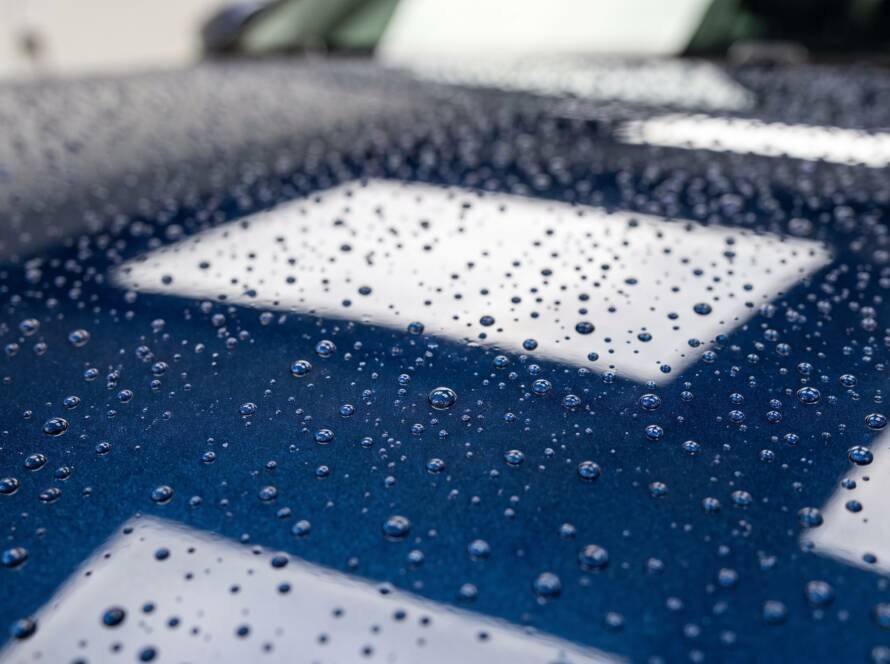
- Hydrophobic — water, road salt, and mud bead up and roll off instead of bonding to the paint
- Chemically resistant — bird droppings, tree sap, and industrial fallout are far less likely to etch into the clear coat
- Easier to clean — contamination doesn’t bond as aggressively, so washes take less effort and less mechanical scrubbing (which causes swirl marks)
- Glossier — adds depth and clarity to the paint finish
What ceramic coating does not do: it doesn’t absorb physical impacts. A rock chip that hits a ceramic-coated hood will still chip the paint. The ceramic layer adds hardness, but it has no meaningful thickness to absorb road debris.
Paint Protection Film — Physical Barrier
Paint protection film (PPF) is a clear, flexible thermoplastic urethane film that’s cut and applied directly to the paint surface. It sits between the outside world and your paint like an invisible shield. At MDM Auto Detail we install XPEL, SunTek, and 3M films.
PPF absorbs what ceramic coating cannot:
- Rock chips and road debris — the film takes the impact; your paint doesn’t
- Parking lot scratches — minor abrasions from shopping carts, keys, and doors stop at the film
- Self-healing capability — quality PPF has a top coat that can heal light surface scratches with heat (sun exposure, warm water)
- Edge wear — high-impact areas like the hood leading edge, front bumper, and mirrors are protected from repeated chip damage
What PPF does not do as well as ceramic: a bare film surface without a coating over it still attracts water spots and environmental contamination. Most professional installs now include a ceramic coating applied over the film to get both benefits simultaneously.
How Ontario Winters Change the Calculation
Richmond Hill and the broader GTA have a specific set of conditions that matter here:
Road salt is the big one. Richmond Hill and York Region use significant volumes of road salt from November through March. Salt doesn’t just rust your undercarriage — it etches paint over time through repeated freeze-thaw cycles, and it accelerates any existing paint damage.
Freeze-thaw cycling means your car expands and contracts repeatedly. Any existing rock chips become entry points for moisture, which then freezes, expands, and lifts the paint further.
Highway debris on the 404, 400, and surrounding arterials is constant. Gravel, sand, and road material sprays at speed — and Richmond Hill’s position on major commuter routes means most of our clients are exposed to this daily.
Here’s what that means for the PPF vs ceramic coating decision:
| Threat | Ceramic Coating | PPF |
|---|---|---|
| Road salt etching | Strong protection | Strong protection |
| Rock chips and debris impact | No impact protection | Absorbs impact |
| Bird droppings and UV | Strong protection | Good protection |
| Parking scratches | Light protection only | Strong protection |
| Water spotting | Beads off hydrophobically | Needs coating over top |
| Paint depth and gloss | Enhances significantly | Neutral |
| Longevity | 3-9 years (tier-dependent) | Up to 10 years |
Which One Is Right for Your Situation?
Choose Ceramic Coating If:
Your daily driving is mostly city and suburban roads with limited highway exposure. If you’re driving Yonge St to the office and parking in a covered garage, ceramic coating covers your biggest risks — salt, contamination, and UV — without the added cost of full film coverage.
You prioritise gloss and visual depth. Ceramic coating genuinely enhances paint appearance in a way that bare PPF doesn’t. If the way your car looks matters as much as protection, ceramic is the right call.
Your car already has well-preserved paint. Ceramic coating is ideal for newer vehicles or vehicles that have had paint correction done and you want to lock in that finish going forward.
Choose PPF If:
You drive the 404 or 400 regularly. Highway driving at speed in Ontario generates constant debris impact. If the front of your car takes regular highway miles, the hood and bumper will chip — it’s not a question of if, it’s when. Film stops that.
You drive a new vehicle or a car you care about preserving long-term. The first chip on a brand new car is painful. Film on the front end prevents it entirely.
You park in exposed outdoor lots. Ceramic coating offers minimal protection against someone’s car door or a shopping cart. Film on the rocker panels, doors, and bumper handles that.
You drive a luxury or exotic vehicle. The higher the vehicle value and the higher the cost to repaint, the more the argument for film — especially on high-strike areas — becomes overwhelming.
The Best Option: PPF + Ceramic Coating Combined
This is what we recommend for most serious car owners in the GTA.
The approach: apply paint protection film to the high-impact zones where physical damage is most likely, then apply ceramic coating over the entire car — including over the film. This gives you:
- Physical impact absorption on the front bumper, hood, mirrors, and rocker panels
- Salt, UV, and contamination resistance across all painted surfaces
- A single hydrophobic surface that’s easy to maintain year-round
- The depth and gloss enhancement of ceramic across the whole vehicle
The combination approach is the standard we see on BMWs, Audis, Porsches, and Mercedes-Benz vehicles brought to us by owners who want their cars properly protected for the long haul. It’s the most comprehensive option, and it’s what we’d choose for our own cars. If you drive a Porsche specifically, see our guide on ceramic coating for Porsche.
What About Partial PPF Coverage?
Full-body PPF is thorough but not always necessary. Partial coverage targets the highest-risk zones:
- Partial front end — front bumper, partial hood (24 inches), and mirrors. The areas that catch the most highway debris. Typically a one-day install.
- Full front end — full hood, full front bumper, fenders, mirrors, A-pillars, and headlights. Best for heavy highway drivers. One to two days.
- Full vehicle — all painted exterior panels. Two to three days.
- Rocker panels — protects the lower door edges and sills from stone chips and kicked-up road material.
- Door cup guards — small pieces that prevent fingernail scratches around the door handles.
For a driver in Richmond Hill who commutes on local roads primarily, a partial front-end film package combined with a full-vehicle ceramic coating often hits the right balance between coverage and investment. See our full paint protection film and ceramic coating service pages for details.
Our Recommendation for Richmond Hill Drivers
We work on European cars primarily — BMWs, Audis, Mercedes, Porsches — and the conversation is almost always the same. If you’re parking a well-maintained or new vehicle in Richmond Hill, driving any amount of highway miles, and planning to own the car for more than 3 years:
- Start with a paint inspection to see the current condition of your clear coat
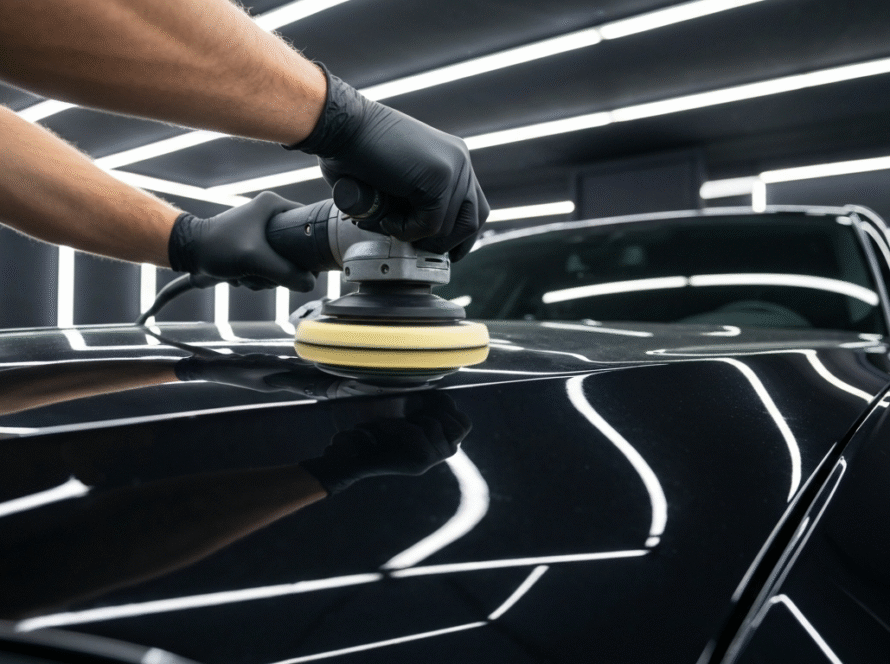
- Do paint correction first if needed — no point protecting swirl marks and scratches permanently
- Apply PPF to the front bumper, hood, and mirrors at minimum
- Apply ceramic coating over the entire car, including over the film
That’s the approach that keeps your paint looking factory-correct and protects it against everything Ontario roads throw at you.
If you’re not sure where your car sits, bring it in. Our free paint assessment takes about 20 minutes — we inspect under LED inspection lighting, check paint thickness readings, and give you a straight recommendation with no pressure.
Frequently Asked Questions
Is PPF or ceramic coating better for Ontario winters?
For Ontario winters specifically, both serve different roles — road salt etching is handled well by either. But Ontario’s combination of highway debris, freeze-thaw cycles, and long winters makes a combined PPF and ceramic approach the most effective. PPF handles rock chips; ceramic handles salt and contamination. Used together they cover every threat.
Can you apply ceramic coating over paint protection film?
Yes — and this is standard professional practice. Applying a ceramic coating over PPF gives the film a hydrophobic surface that repels salt and contamination while also making it easier to maintain. The ceramic bonds to the film’s top coat and behaves the same way it does on bare paint.
How long does paint protection film last in Ontario?
Quality professionally installed paint protection film can last up to 10 years in Ontario conditions. Road salt, UV exposure, and freeze-thaw cycles can accelerate degradation on lower-grade films or on film applied without proper prep — which is why installation quality matters significantly. We install XPEL, SunTek, and 3M films with self-healing top coats.
Does ceramic coating prevent rock chips?
No. Ceramic coating adds hardness to the clear coat surface, but it has no meaningful thickness or flexibility to absorb impact from road debris. Paint protection film is the only product that prevents rock chips. Ceramic coating protects against salt, UV, chemical etching, and makes washing easier — it does not stop physical impact damage.
Do I need paint correction before getting PPF or ceramic coating?
Yes — for both. PPF locks in whatever the paint looks like underneath it at time of install. Ceramic coating bonds to the clear coat and makes existing defects more visible under light by adding gloss. If your paint has swirl marks, scratches, or oxidation, these need to be corrected before either product is applied. We include a full paint inspection in every consultation so you know exactly what’s needed before committing.
How long does PPF installation take?
A partial front end takes about one day. A full front end takes one to two days. Full vehicle coverage takes two to three days.
Book a Free Paint Assessment
Bring your car to MDM Auto Detail — 11352 Yonge St, Unit 1, Richmond Hill. We’ll inspect the paint, tell you what stage of correction it needs, and give you a straight recommendation on PPF, ceramic coating, or both.
Call (647) 370-3443 or book online. Serving Richmond Hill, Vaughan, Markham, Thornhill, and the Greater Toronto Area.

1 Comment